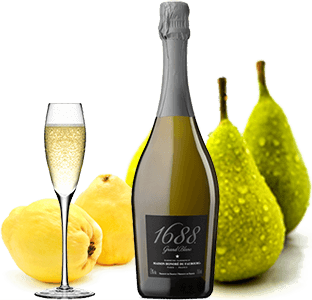
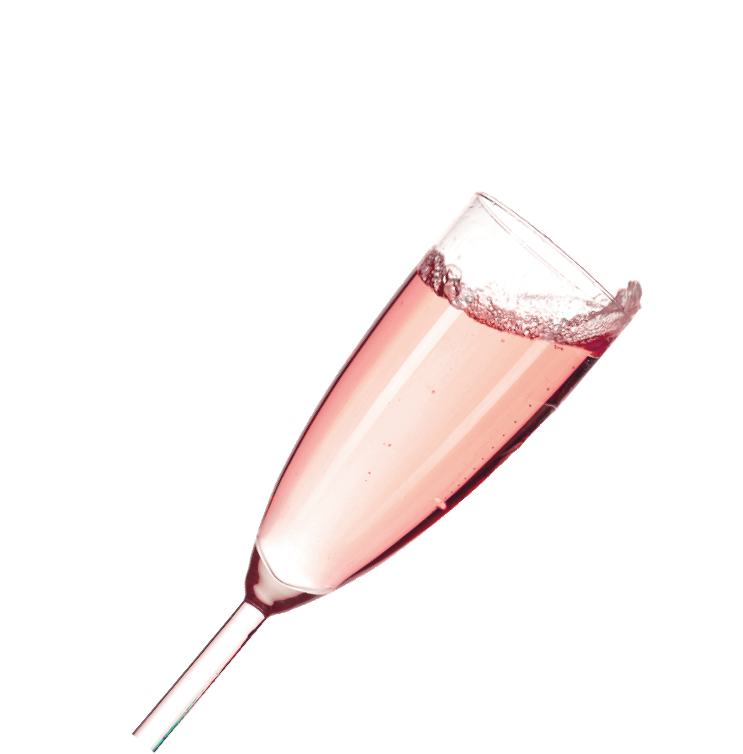
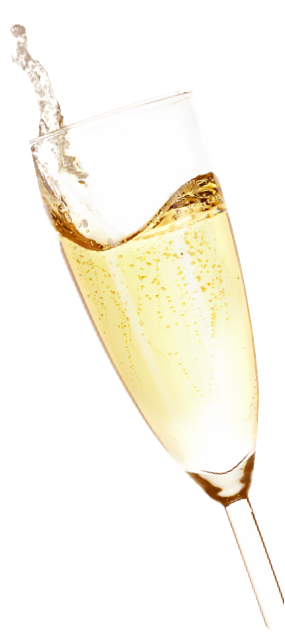
Always looking for perfection, I wanted to offer to the Cuvée 1688 an ultra-premium packaging. This luxurious creation with no alcohol reveals its full flavor when poured from the classic bottle with its prestigious label. An elegant ruby cap for the Rosé and anthracite gray for the Blanc cover the special cork protected by the “muselet”, wine cage, with its decorated disc.
The objective of 1688 Grand Rosé and 1688 Grand Blanc is to combine full flavor with no alcohol to give dignity to our noble ingredient, the grape.
To accompany food
This is the perfect aperitif. 1688 Grand Blanc is also a delicious accompaniment to white meats (veal escalope, fillet of pork or chicken tagine) and fish (grilled sole, salmon en papillotte, roast monkfish)
IMPRESSIONS
APPEARANCE
Predominantly bright, pale gold with rich golden highlights.
Nose
The nose is balanced with a poised freshness and a developed fragrance of Springtime undergrowth.
PALATE
Initially this well-balanced Cuvée makes a strong impression: great freshness allied to fragrant white and yellow fruit, crispy pear and quince leading to good length on the finish. Delicate and fine bubbles.
the legend
Paris, 1688. On a beautiful spring day, a young man named Honoré befriended an aged bishop, native of the Châlons-en-Champagne region. Worn-down by time, the old man passed away a few months later. With his last words, he whispered in his friend’s ear the secret recipe for an elixir that he was the only one who possessed it. Honoré swore by all the saints that he would never disclose it to anyone. History does not tell us what happened to him, or what he did with this weighty secret.
But according to a legend, Honoré managed to seduce the most beautiful young maiden by following the old bishop’s recipe to the letter and so, creating an elixir to arouse her passion. Jealous men accused him of witchcraft. One morning, tired of being relentlessly attacked, Honoré and his beloved disappeared. Nobody ever saw them again.
In 1928, a sealed envelope, yellowed by centuries gone by, was discovered during the restoration of an ancient Parisian building on the rue du Faubourg Saint-Honoré. The dusty and almost illegible letter described with great precision a recipe, with no alcohol, based on red and white grapes. It was signed: Honoré. Back then the recipe was considered uninteresting and with no future. So the old envelope ended up in a box... before reappearing in 1988, on the stall of a secondhand bookseller on the banks of the Seine
Version 1.0
Date d'application : Mars 2020 à 8H00.
Conception, Création et développement
Studio Hayaku, contact@hayaku.fr
Hébergement informatique www.online.net
ONLINE SAS BP 438 75366 PARIS CEDEX 08
Tél : 01 84 13 00 01
CONDITIONS D’UTILISATION
Le site www.maison-honore-du-faubourg.fr est réalisé par la société MAISON HONORÉ DU FAUBOURG® ayant son siège social au 8, rue Lemercier 75017 Paris immatriculée au RCS de Paris sous le numéro 528 132 756 (ci-après « MAISON HONORÉ DU FAUBOURG® »).
MAISON HONORÉ DU FAUBOURG® assure au mieux de ses possibilités, l'exactitude des informations ainsi que leur mise à jour diffusées sur ce site, dont elle se réserve le droit de corriger le contenu à tout moment et sans préavis. Toutefois, MAISON HONORÉ DU FAUBOURG® ne peut garantir la précision, l’exhaustivité ou la précision des informations mises à la disposition sur ce site.
En conséquence, MAISON HONORÉ DU FAUBOURG® décline toute responsabilité :
en cas d’erreurs informatiques,
pour toute interruption du site,
pour tout dommage résultant d'une intrusion frauduleuse d'un tiers ayant entraîné une modification des informations mises à la disposition sur le site,
pour toute inexactitude ou omission portant sur des informations disponibles sur le site,
LIENS
Le site peut inclure des liens vers d'autres sources Internet ou sites Web. Dans la mesure où MAISON HONORÉ DU FAUBOURG® ne peut contrôler ces sites et ces sources externes, MAISON HONORÉ DU FAUBOURG® ne peut être tenu pour responsable de la mise à disposition de ces sites et sources externes, et ne peut supporter aucune responsabilité quant au contenu, publicités, produits, services ou tout autre matériel disponible sur ou à partir de ces sites ou sources externes. De plus, MAISON HONORÉ DU FAUBOURG® ne pourra être tenu responsable de tout dommage ou perte avérés ou allégués consécutifs ou en relation avec l'utilisation ou avec le fait d'avoir fait confiance au contenu, à des biens ou des services disponibles sur ces sites ou sources externes.
La création de liens hypertextes vers le site MAISON HONORÉ DU FAUBOURG® est soumise à l'accord préalable de MAISON HONORÉ DU FAUBOURG®. Pour toute demande, vous pouvez envoyer un message sur le à l’adresse mail suivante : contact@maison-honore-du-faubourg.fr
Please note that we deliver only in France. If you wish a delivery in another country, please contact us at the following E-mail address contact@maison-honore-du-faubourg.fr
Press review
Please find below press releases related to WMaison Honoré du Faubourg.
ASIE - ASIA
Japon - Japan
Yell Inc.
Tokyo
info@yellinc.com
Malaisie – Malaysia
Cave & Cellar Sdn Bhd
Kuala Lumpur
candy@cavcel.com.my
EUROPE
France
Maison Honoré du Faubourg
Paris
contact@maison-honore-du-faubourg.fr
Ile de la Réunion – Reunion Island
Bulles By Sha
bullesbysha@hotmail.fr
Grande Bretagne - United Kingdom
Rarewood (London) Ltd
Londres – London
tessa@rarewoodltd.co.uk
Hongrie - Hungary
Castimonia Kft. (Ltd)
Budapest
jeschkata@gmail.com
If you are a professional or a private, please contact us with the form below. We will make sure to grant your request.